Traceability · manufacturing since 2010
Every bundle carries its heat number
From the mill coil to your shop floor, every bar we produce is traceable to its original heat — and to the line, shift, operator and die that made it.
Why this matters
Everyone claims traceability. Few can answer the question that tests it.
The question is simple: for this specific bundle in my yard, which mill heat did it come from, which line drew it, on which shift, and where is the certificate?
The chain rarely breaks at the mill. It breaks in the processor’s yard. Coils are received, stacked, blasted, drawn and bundled — and somewhere in that sequence the paperwork sits in a register while the material moves independently. By dispatch, the connection between a specific bundle and a specific heat is a matter of recollection.
The other common break is re-keying. A heat number written on a receipt note, copied to a production sheet, copied again to a challan — each transcription is a chance for a digit to change, and nobody notices until an auditor does.
We built our production around removing both failure modes. The heat number is entered once, at goods receipt, into the ERP. From that moment it is inherited by every downstream document automatically. It is never typed a second time.
The chain
Six links, and none of them re-typed
- 01
Mill Coil
Heat Number + Mill Test Certificate
Steel arrives from the mill identified by its heat number — the specific melt it was cast from — accompanied by that heat's certified chemistry and mechanical properties.
- 02
Goods Receipt (GRN)
Heat number recorded once, in the ERP
At receipt the heat number is booked against the consignment together with the weighbridge slip and the mill certificate. Entered once — every document downstream inherits it, so it can never drift or be re-keyed wrongly.
- 03
Cold Drawing
Line · Shift · Operator · Die · Date
When the bar is drawn, the production record links the heat number to the line that drew it, the shift and operator who ran it, the die used and the date — captured at the time of production, not reconstructed later.
- 04
Bundle + QR Tag
Scan for full history
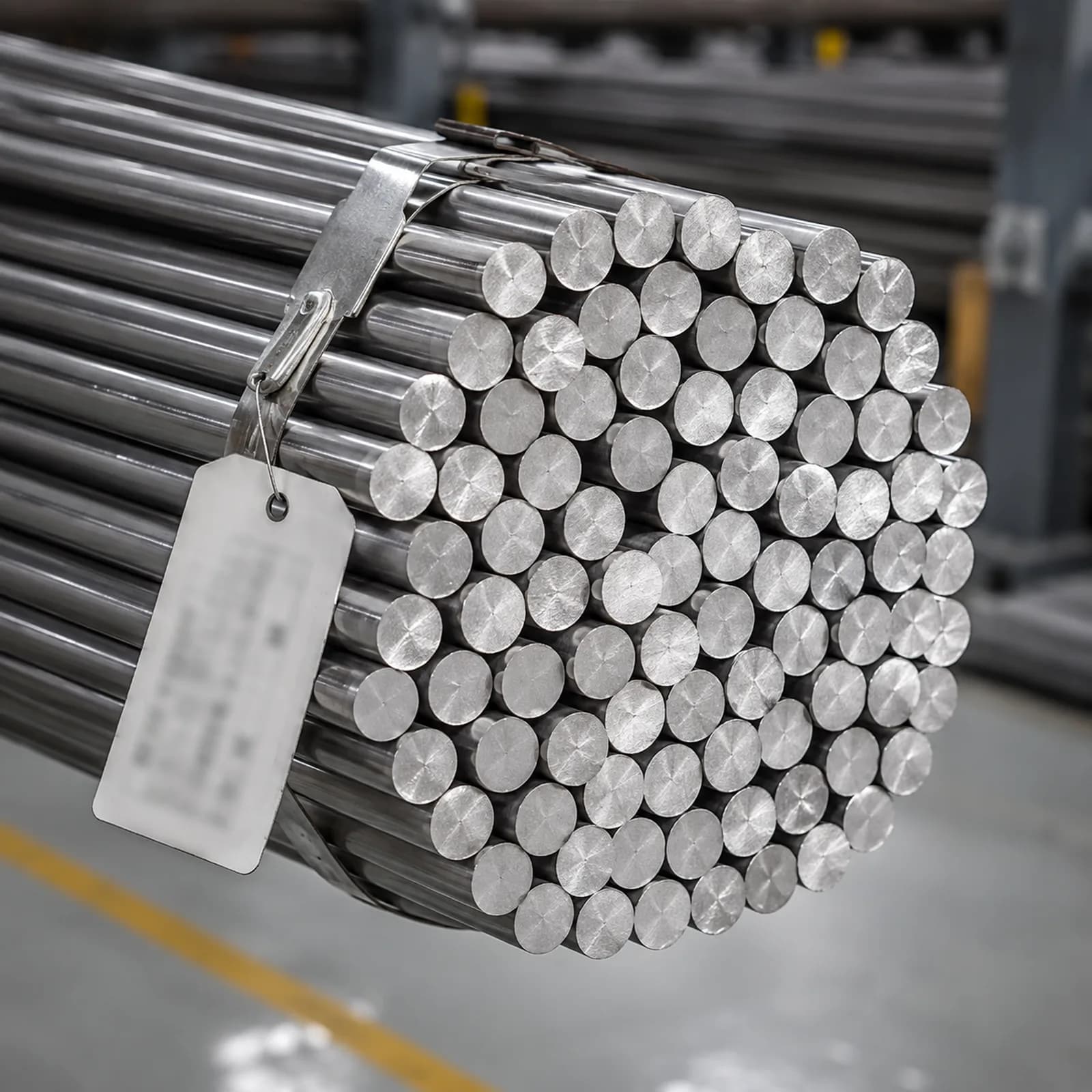
Each finished bundle carries a QR tag encoding its heat number, grade, size and production reference. One scan on a phone returns the complete history of that bundle.
- 05
Delivery Challan
Heat number printed
The heat number is printed on the delivery challan, so the link between the physical material and its documentation survives the journey to your gate.
- 06
Test Certificate
Kalika TC + Mill TC
The consignment ships with the Kalika test certificate carrying the heat number, alongside the original mill certificate for that heat. Your incoming inspection has documented chemistry, not an assumed grade.
The bundle tag
What the QR tag actually carries
Not a marketing sticker. The tag is generated from the production record for that specific bundle.
- Heat number — the mill melt the steel came from
- Grade and size as produced
- Production reference — line, shift and date
- Bundle weight as recorded on the in-house scale
A short video demonstrating a bundle scan will be published here once filmed — see shot 18 and video 3 in our photo plan.
What it gives you
Three situations where this pays for itself
Your quality audit
Complete documentation for the material you received, retrievable on the day it is asked for rather than a week later.
IATF 16949 and ISO compliance
Full batch traceability rather than a general grade certificate — the difference between passing a trace exercise and taking a finding.
When a concern arises
The affected material is bounded to a specific heat immediately. Without traceability, the answer is everything shipped in the period.
Where our responsibility ends and yours begins
- What is a heat number?
- A heat is one melt of steel — one furnace load, cast and rolled together. Every bar from that melt shares the same chemistry. The heat number identifies it, and it is the only identifier that connects a physical bar to a set of certified properties.
- How do I trace a bundle in my yard back to its heat?
- Scan the QR tag on the bundle, or read the heat number printed on your delivery challan. Either one identifies the mill heat, and the test certificate supplied with that consignment carries the same number.
- Does this satisfy an IATF 16949 audit requirement?
- An IATF auditor will typically sample a batch of your finished components and ask you to trace it back to incoming material and its heat. Our documentation chain gives you that link. Your own internal records still need to connect your production batch to the incoming consignment.
- What information is recorded during production?
- For every drawing run: the heat number being processed, the line, the shift, the operator, the die used and the date. It is captured at the time of production in our ERP, not reconstructed afterwards.
Need documented material?
Every dispatch ships with the heat number on the bundle, on the challan and on the certificate. Tell us the grade, size and quantity.