Infrastructure
Built for volume, run with control
Three drawing lines including a coil-to-bar route, in-house shot blasting, straightening, cutting and testing — with covered storage and dispatch across Maharashtra.
Capacity
Why three lines instead of one big one
A single high-capacity line looks efficient on paper and behaves badly in practice. Every grade change means a die change, a lubricant consideration and a setup — and while that is happening, nothing else runs.
Three lines let us hold several grades and size ranges in production at once. A changeover on one line does not stop the others, so a repeat schedule for a volume customer does not have to push someone else back.
Line 03 runs the coil-to-bar route: wire rod coil is straightened and cut into bar before drawing. For the smaller diameters in high volume that is the more efficient path, and it keeps the bar-fed lines free for larger sections.
Everything before and after drawing is in-house too — shot blasting, straightening, cutting and inspection. Nothing goes outside and comes back with a question mark over what happened to it.
Drawing
The drawing lines
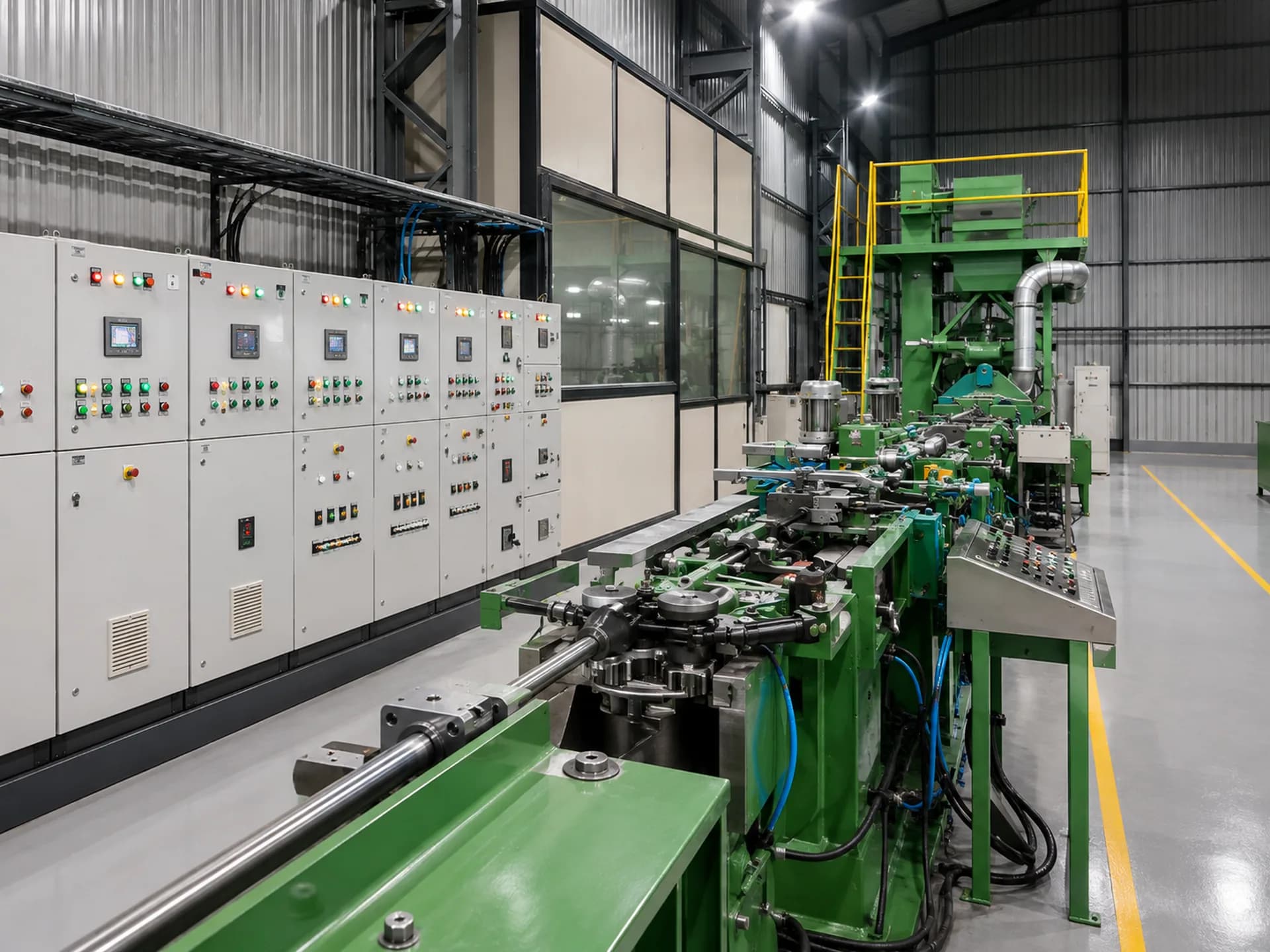
Drawing Line 01
DrawingBar-to-bar cold drawing line handling black bar input across the mid size range. Die, shift and operator are recorded against every heat processed.
- Input
- Hot rolled black bar
- Output
- Bright bar — round and hex
- Traceability
- Line, shift, operator, die and date logged per heat
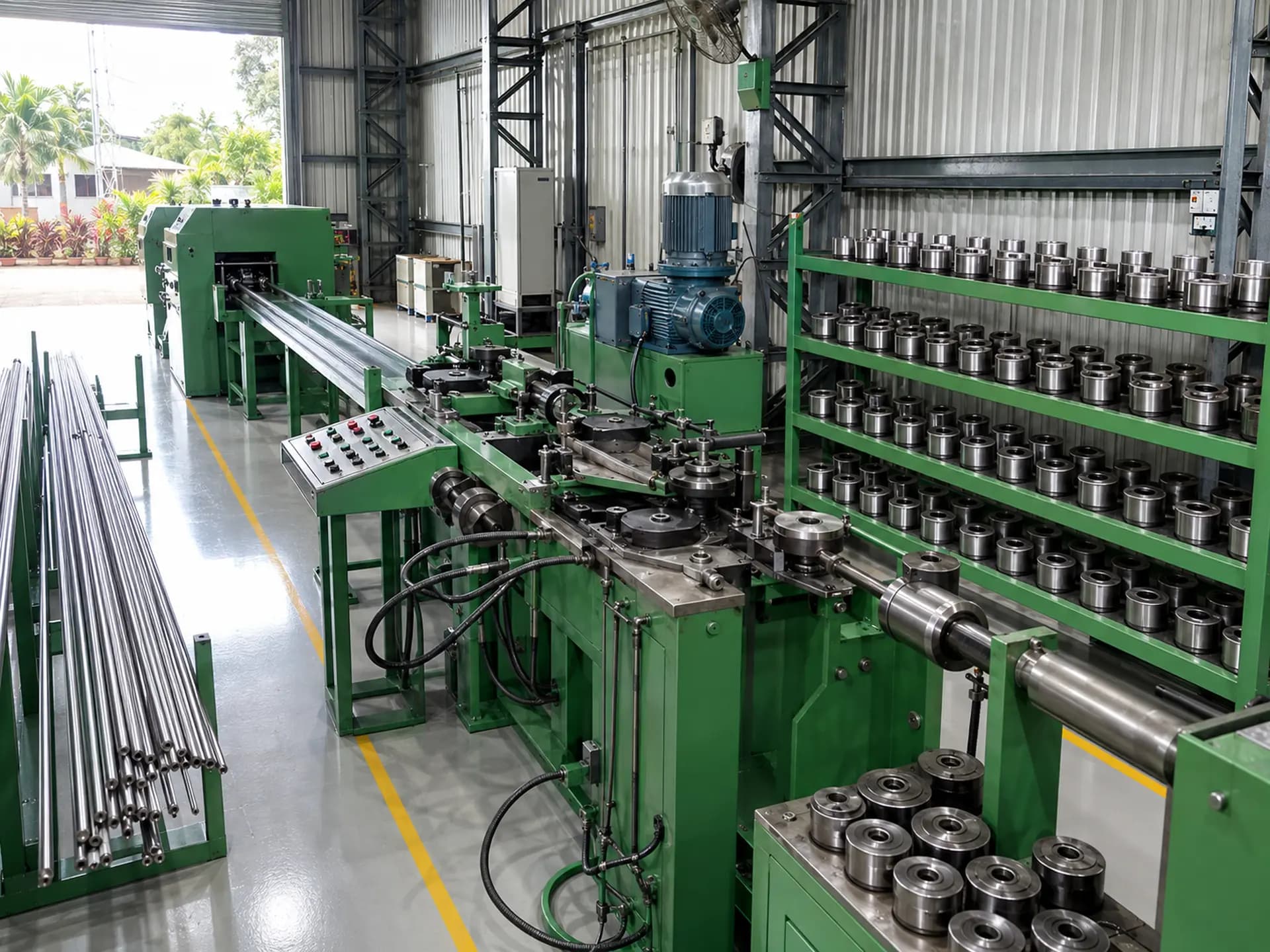
Drawing Line 02
DrawingSecond bar-to-bar drawing line, giving parallel capacity so grade changes on one line do not stop production of another grade.
- Input
- Hot rolled black bar
- Output
- Bright bar — round and hex
- Benefit
- Parallel capacity across grades and sizes
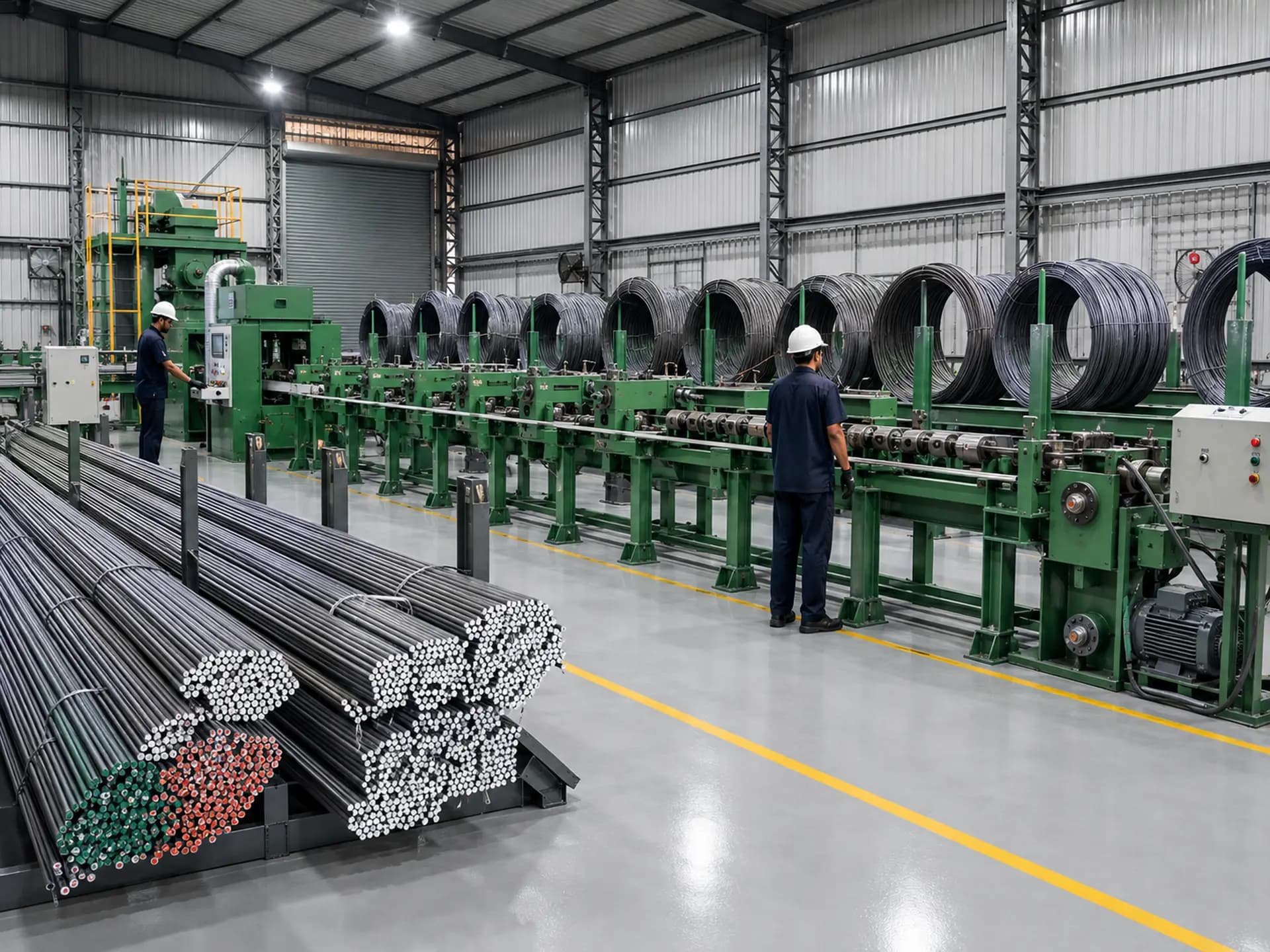
Drawing Line 03 — Coil to Bar
DrawingCoil-fed line. Wire rod coil is straightened and cut into bar, then drawn to finished bright bar — the most efficient route for the smaller diameter, high-volume sizes.
- Input
- Wire rod coil
- Route
- Coil → straighten → cut → draw → bright bar
- Best for
- Smaller diameters in high volume
Preparation
Surface preparation
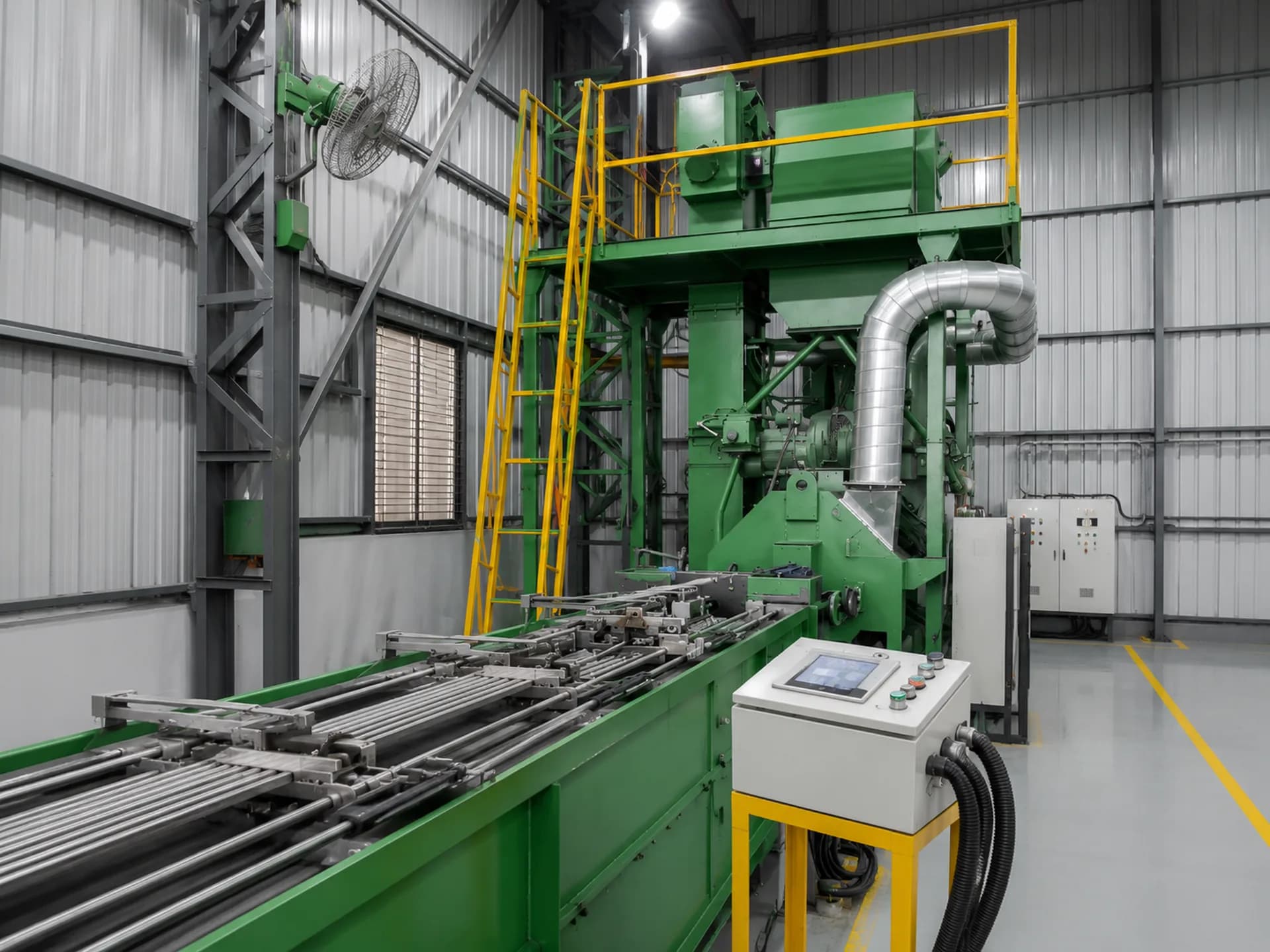
Shot Blasting Unit
PreparationMechanical descaling by steel shot. No acid, no effluent, and a lightly textured surface that holds drawing lubricant better than a pickled one.
- Method
- Steel shot impact descaling
- Removes
- Mill scale and surface rust
- Advantage
- No chemical residue or effluent
Finishing
Straightening and cutting
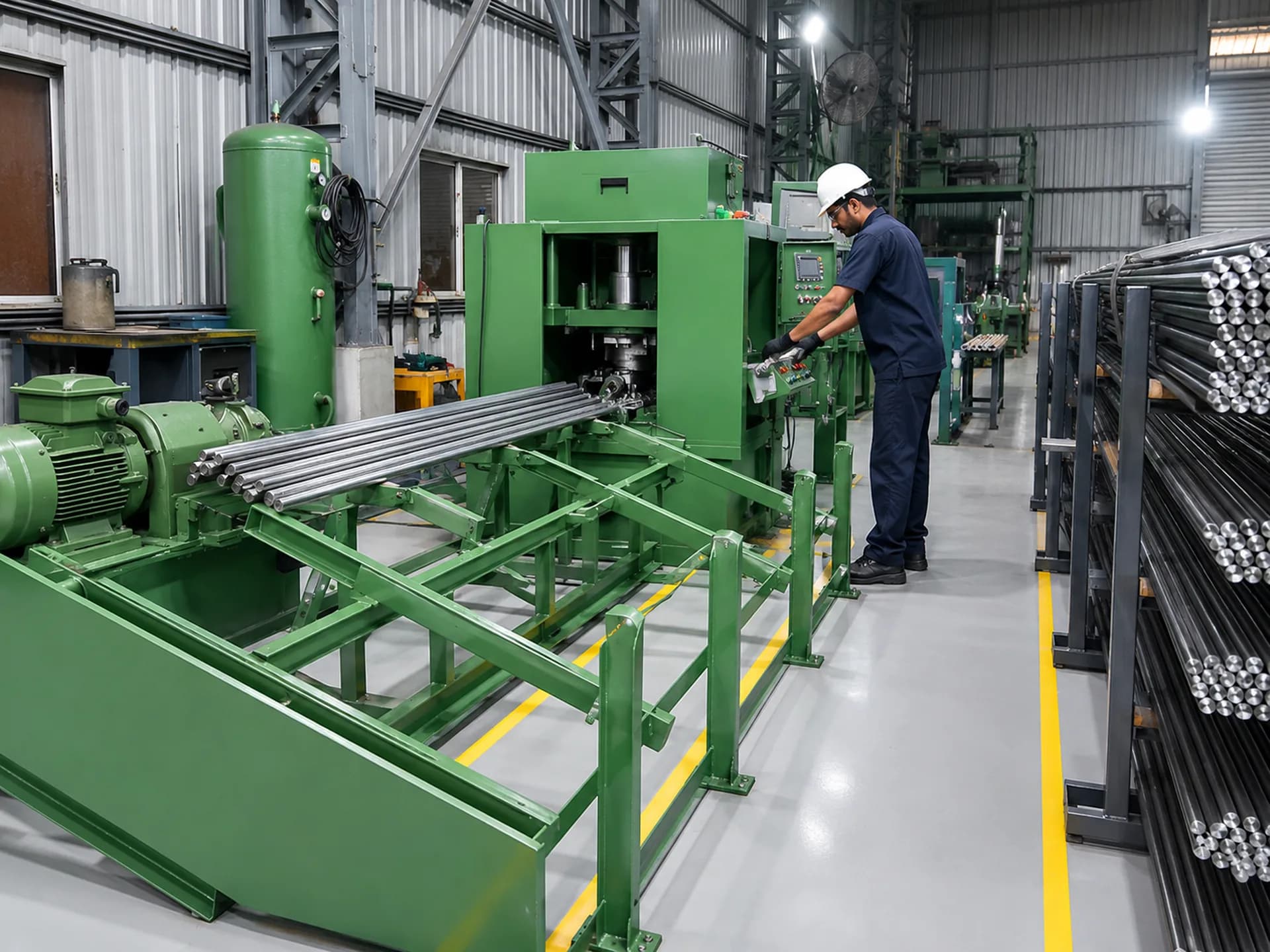
Straightening & Cutting
FinishingCross-roll straightening followed by cutting to standard or customer-specified lengths. Straightness is a monitored process parameter, not an incidental outcome.
- Straightening
- Cross-roll
- Cutting
- Standard lengths or cut to bar feeder requirement
- Why it matters
- Governs bar feed reliability and machining allowance
Quality
Inspection and testing
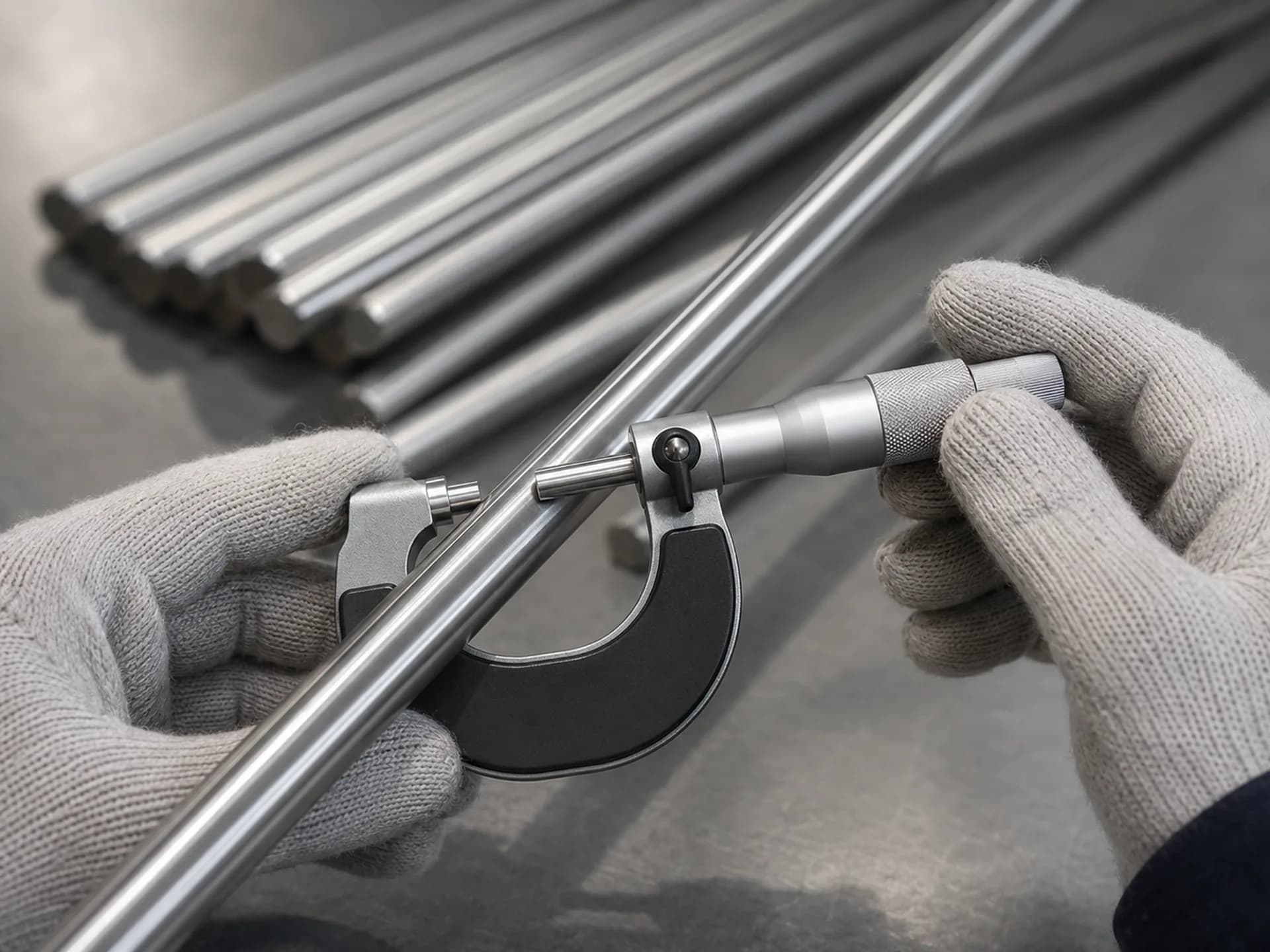
In-house Testing
QualityDimensional and hardness verification in-house on every batch, supported by certified chemical and mechanical testing for the certificate issued with each consignment.
- Dimensional
- Micrometer verification against tolerance band
- Hardness
- Verified per batch
- Chemical & mechanical
- Certified for every dispatch
Logistics
Storage and dispatch
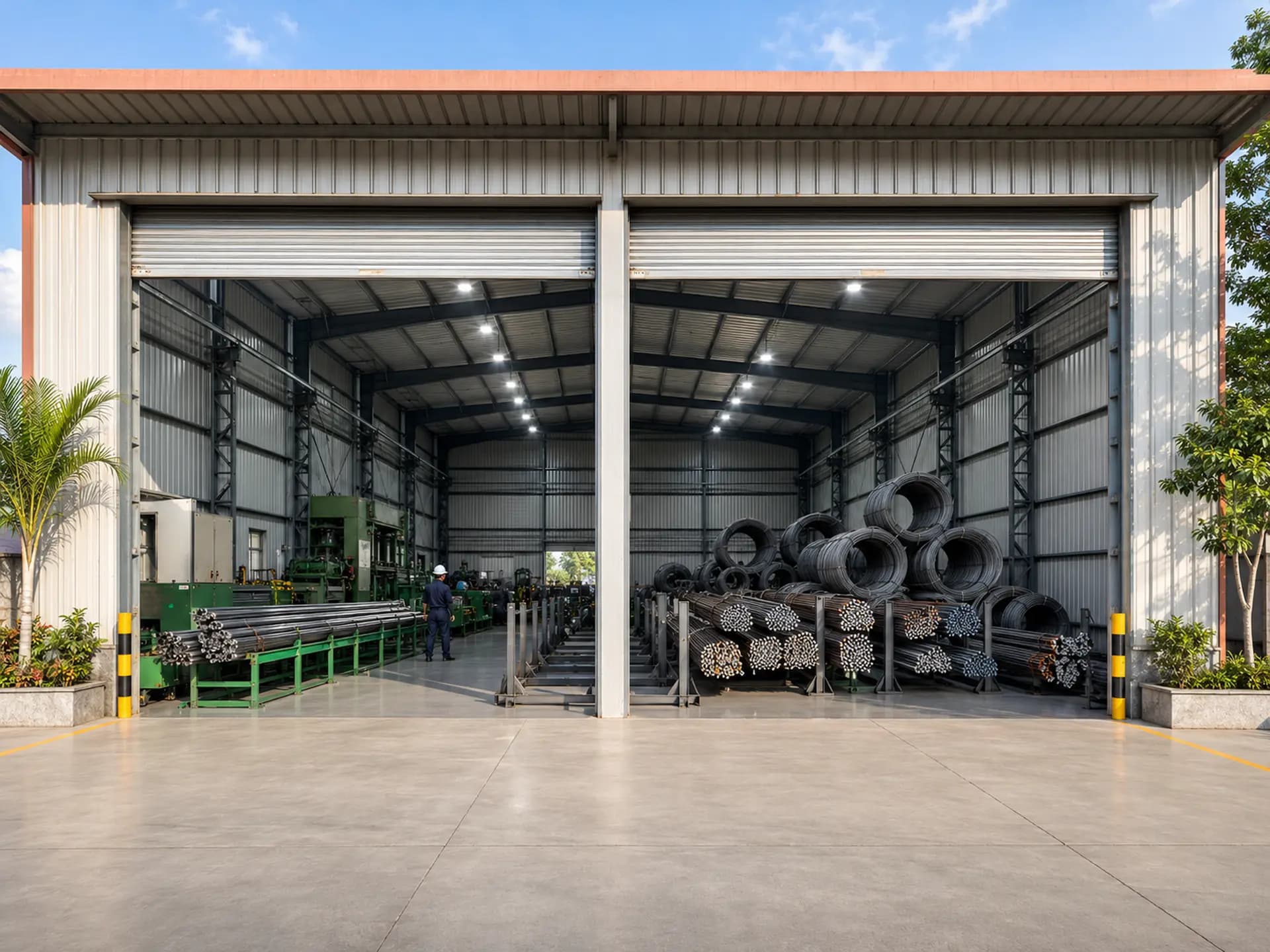
Warehouse & Logistics
LogisticsCovered storage with bundles racked by grade and size, and dispatch across Maharashtra. Outward weighment on the public weighbridge, with the slip filed against the challan.
- Storage
- Covered, racked by grade and size
- Dispatch
- Across Maharashtra
- Weighment
- Public weighbridge slip filed against every dispatch
The part you cannot photograph
The plant runs on an ERP, not a register
Machines are the visible half of a plant. The half that decides whether your auditor gets an answer is the record system.
Every incoming consignment is booked against its heat number with the weighbridge slip and mill certificate attached. Every production run links that heat to the line, shift, operator, die and date. Every bundle gets a QR tag. Every challan prints the heat number.
None of that is reconstructed at month end. It is captured as the work happens, which is the only way it stays true.
Tell us what you need
Want to see it? Customers are welcome at the plant — call ahead and we will show you the lines.